Why is Environmental Audit Important for Businesses?
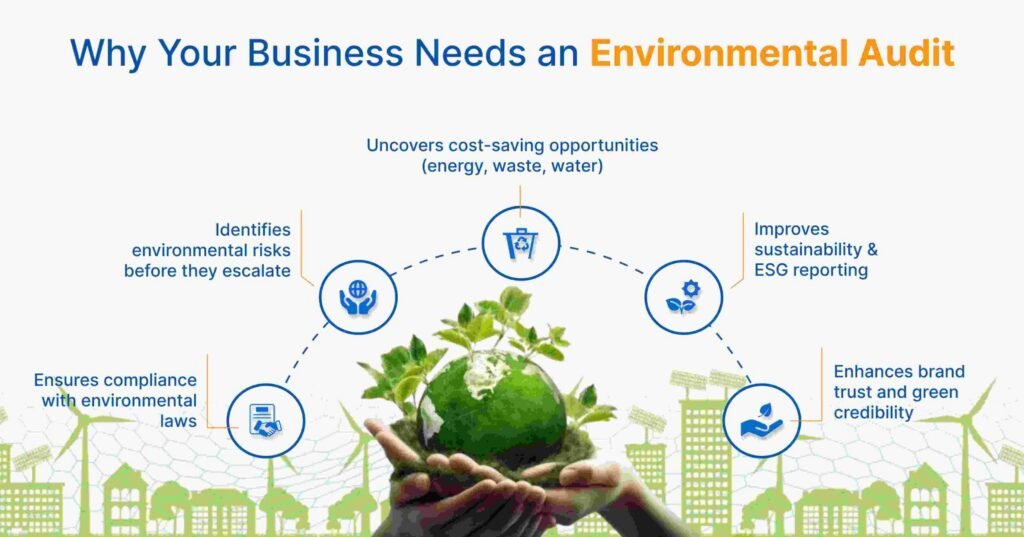
Environmental audits are vital for businesses, helping them ensure compliance with regulations, identify potential risks and liabilities, and show a commitment to sustainability.
1. Ensuring Compliance
Audits help businesses understand and adhere to current environmental laws while also anticipating future standards, preventing both immediate fines and future compliance issues.
2. Identifying and Mitigating Risks
Audits help businesses pinpoint potential environmental hazards, like pollution or waste management issues, before they escalate into major problems.
By addressing identified risks, businesses can decrease the likelihood of accidents, environmental damage, and the associated financial and legal repercussions.
3. Enhancing Reputation and Stakeholder Relations
Demonstrating a commitment to environmental responsibility through audits can enhance a company’s reputation and build trust with customers, investors, and the public.
A positive environmental record can be a valuable asset, attracting environmentally conscious customers and investors.
4. Improving Operational Efficiency and Cost Savings
Audits can reveal areas where businesses can reduce energy consumption, waste generation, and resource usage, leading to cost savings. For example, an audit might reveal that switching to LED lighting and fixing compressed air leaks could save a manufacturing plant thousands of dollars annually in energy costs.
Identifying and addressing waste management inefficiencies can lower disposal fees and related expenses.
5. Promoting Sustainability
Audits help businesses establish measurable environmental objectives and track their progress toward sustainability goals.
By regularly assessing their environmental performance, businesses can identify areas for ongoing improvement and enhance their sustainability practices.
How is an Environmental Audit Done?
An environmental audit is a systematic process for evaluating an organization’s environmental performance and its adherence to relevant regulations.
1. Planning and Preparation
- Define Scope and Objectives: Determine the specific areas, processes, and activities to be audited, along with the audit’s goals (e.g., assessing compliance, identifying improvement opportunities).
- Assemble the Audit Team: Select qualified individuals with the necessary expertise to conduct the audit, assigning specific roles and responsibilities.
- Develop an Audit Plan: Establish a timeline with key milestones, create checklists, and gather relevant documents such as environmental policies, permits, and previous audit reports.
- Notify Stakeholders: Inform management and relevant personnel about the audit’s scope, objectives, and schedule to ensure their cooperation and support.
- Arrange Logistics: Ensure the audit team has the necessary resources, including access to facilities, documentation, and personnel for interviews.
2. Conducting the Audit
- Review Documents: Examine relevant environmental policies, compliance records, training reports, monitoring data, and other pertinent documents.
- Site Inspection: Conduct on-site visits to assess operations, identify potential environmental hazards, and observe compliance with regulations.
- Interviews: Conduct interviews with personnel involved in environmental management and operations to gather information and assess their understanding of procedures and responsibilities.
- Sample Collection: Collect samples of air, water, or waste materials for analysis, if necessary, to assess pollution levels and compliance with standards.
3. Analyzing Findings and Reporting
- Evaluate Data: Analyze the collected data and information to identify areas of non-compliance, potential risks, and opportunities for improvement.
- Prepare a Report: Compile a comprehensive audit report that outlines findings, recommendations for corrective actions, and areas for improvement.
- Close-out Meeting: Conduct a meeting with management and relevant stakeholders to discuss the findings, recommendations, and proposed corrective actions.
4. Follow-up
- Develop a Strategy: The organization should develop a plan to address the recommendations and implement corrective actions outlined in the audit report.
- Monitor Progress: Regularly monitor the implementation of corrective actions and assess the effectiveness of the environmental management system.
What is Checked in an Environmental Audit?
During an environmental audit, auditors examine several key areas to provide a complete picture of a company’s environmental footprint.
1. Compliance with Environmental Regulations
Auditors confirm whether the organization adheres to all pertinent environmental laws, regulations, and permits. This involves checking for appropriate handling and disposal of hazardous materials, monitoring emissions, and managing waste.
2. Effectiveness of the Environmental Management System (EMS)
The audit evaluates the EMS to ensure it is properly implemented and functioning effectively. This includes assessing the organization’s policies, procedures, training programs, and internal audits. The goal is to identify gaps and areas where the EMS can be fortified to enhance environmental performance.
3. Environmental Performance
The audit assesses the organization’s environmental performance across various areas:
- Energy and Resource Usage: Auditors evaluate the efficiency of energy consumption, water usage, and resource utilization.
- Waste Management: They assess the organization’s waste generation, recycling, and disposal practices.
- Emissions: Auditors examine air and water emissions, including greenhouse gas emissions and other pollutants.
- Environmental Impact: They assess the overall impact of the organization’s activities on the environment, including potential risks and hazards.
4. Areas for Improvement
By identifying areas of non-compliance and inefficiencies, the audit assists organizations in developing targeted strategies and initiatives to lessen their environmental impact and bolster sustainability. The audit findings can be utilized to craft action plans for improvement, set environmental targets, and track progress over time.
What is the Difference Between an Environmental Audit and an EIA?
Environmental Audit and Environmental Impact Assessment (EIA) are both crucial tools for environmental management, but they serve different purposes and are conducted at different stages.
Here’s a breakdown of their key differences:
What is an Environmental Certification Audit?
A certification audit is a formal assessment conducted by an independent third party to verify that an organization’s processes meet the requirements of a specific standard (e.g., ISO 14001).
Structure of an Environmental Certification Audit Report
A typical certification audit report includes the following parts:
- Report Title: Clearly shows that the document is a certification audit report.
- Introductory Paragraph: Gives a short explanation about why the audit was done and what was covered.
- Scope of the Audit: Describes what areas, systems, or departments were included in the audit.
- Audit Objectives: Lists what the audit was trying to achieve, like checking if the company follows a certain standard or finding areas that need improvement.
- Audit Methodology: Explains how the audit was carried out, including steps like reviewing documents, talking to staff, and visiting the site.
- Key Findings: Shares the main things the auditor noticed—both good practices and problems (non-conformities).
- Evidence to Support Findings: Gives clear examples or documents that support each point made in the findings.
- Impact of Findings: Describes how the problems found could affect the company or its processes.
- Conclusions: Summarizes the auditor’s opinion on whether the company meets the standard.
- Recommendations: Suggests what the company can do to fix the issues found and improve its systems.
- Actionable Suggestions: Provides simple and practical steps the company can follow to apply the recommendations and move towards getting certified.
- Auditor’s Name and Signature: Shows who carried out the audit and prepared the report.