Types of Franchise Agreements
Understanding the different types of franchise agreements is crucial for both parties:
- Individual franchise agreement: This is the most common type, granting a single franchisee the right to operate one franchised unit. It’s also known as a single-unit franchise agreement.
- Multi-Unit Franchise Agreement: A franchisee is granted the right to open and operate more than one franchised unit within a specific territory.
- Area Development Agreement: Similar to multi-unit, but the franchisee commits to developing a certain number of units within a defined area over a set period.
- Master Franchise Agreement: A master franchisee can run their outlets and also give franchise rights to others in a large area, like a whole country. They sign sub-franchise agreements with these new franchisees.
- Conversion Franchise Agreement: An existing independent business converts into a franchised unit under a franchisor’s system.
- Brand franchise agreement: This generally refers to the agreement for a specific brand’s franchise, covering the terms and conditions unique to that brand.
- Franchise license agreement: Highlights the licensing aspect of the franchisor’s intellectual property and system to the franchisee.
How Does a Franchise Agreement Work?
When you enter into a franchise agreement, you get access to everything needed to run the business, including training, marketing support, and the right to use the brand and business model. In exchange, you invest your own money to set up and operate the business locally and pay regular fees (royalties) to the franchisor.
The agreement clearly outlines:
- How long will the franchise last
- Rules for renewing or ending the contract
- How disputes will be handled
The goal is to ensure that every franchise location maintains the same high quality and customer experience, regardless of its location
Laws that Govern Franchise Agreements in India
India doesn’t have a specific law dedicated to franchising. However, franchise agreements are legally valid and governed by several well-established Indian laws, including:
- The Indian Contract Act, 1872: This act lays down the basic rules for creating and enforcing contracts. It ensures that the franchise agreement is legally binding and clearly defines the duties and obligations of both parties.
- The Trademarks Act, 1999: Since franchising often involves the use of brand names and logos, this act protects the franchisor’s trademarks. It allows the franchisee to use the brand while safeguarding the brand’s legal ownership.
- The Copyright Act, 1957, and The Patents Act, 1970: These laws protect the franchisor’s intellectual property, like training materials, designs, software, or patented products, that are shared with or used by the franchisee.
- The Competition Act, 2002: This act aims to prevent unfair or restrictive business practices. In franchise agreements, clauses like fixed pricing or exclusive territories are allowed only if they don’t harm market competition or lead to a dominant position.
- The Consumer Protection Act, 2019: This law holds both franchisors and franchisees accountable for product and service quality. It ensures that consumers have rights and protection, no matter who is operating the outlet.
- The Foreign Exchange Management Act (FEMA), 1999: FEMA applies when a foreign franchisor is involved or when payments such as royalties and fees are made across borders. It governs how foreign currency transactions are handled in franchising.
Note: Disclosure laws, such as the Franchise Disclosure Document (FDD), are not yet mandatory but are commonly followed voluntarily by reputable franchisors.
Provisions of the Franchise Agreement
A well-drafted franchise agreement outlines all the important terms that govern the relationship between the franchisor and franchisee. Below are the key provisions included:
- Grant of Franchise: This section defines the rights given to the franchisee, such as the use of the franchisor’s brand, business systems, and operational support. It may also mention exclusive rights within a certain territory.
- Franchise Fee and Royalties: This includes the initial non-refundable fee and ongoing payments, usually 4% to 10% of gross sales in India. Royalties may be paid monthly or quarterly, and contributions to a shared marketing fund may also apply.
- Term and Renewal: This outlines how long the agreement will last and the conditions under which it can be renewed, such as performance requirements or fee payments.
- Territory: Specifies the geographical area in which the franchisee can operate. It may grant exclusivity or define boundaries to avoid overlap with other franchisees.
- Training and Support: Covers the initial training provided by the franchisor and any ongoing assistance, such as refresher courses or operational support.
- Operational Standards: Set guidelines for how the franchise must be run, including product quality, service standards, cleanliness, and customer experience. These standards help maintain brand consistency.
- Intellectual Property: Describes the proper use of the franchisor’s trademarks, copyrighted materials, trade secrets, and proprietary business processes.
- Marketing and Advertising: Defines who is responsible for advertising at the local and national levels. It may also include mandatory contributions to marketing funds.
- Confidentiality: Protects sensitive information shared with the franchisee during the relationship. This includes business strategies, manuals, and financial data.
- Indemnification: Lays out how liability will be handled if one party’s actions cause loss or damage to the other, especially in legal claims from third parties.
- Default and Termination: Lists situations that could lead to the agreement being terminated, such as non-payment or breach of terms, and whether a cure period (time to fix the issue) is provided.
- Post-Termination Obligations: Explains what the franchisee must do once the agreement ends, including stopping the use of the brand, returning proprietary materials, and possibly agreeing to a non-compete period.
- Dispute Resolution: Provides the method for resolving disputes, usually through arbitration, mediation, or legal proceedings, and specifies where such processes will take place.
Note: Most Indian franchise agreements include an arbitration clause under the Arbitration and Conciliation Act, 1996, with Delhi, Mumbai, or Bangalore often chosen as the arbitration seat.
Documents Required for Franchise Agreements
While the specific documents may vary, generally, the following are crucial for a franchise agreement in India:
- Franchise Disclosure Document (FDD): While not legally mandated in India, reputable franchisors often provide a detailed FDD outlining their business, financials, and franchise terms.
- Franchise Agreement Draft: The actual legal document outlining the terms and conditions.
- Franchisor’s Business Registration Documents: These documents prove the franchisor’s legal existence and legitimacy. They include:
- Certificate of Incorporation (for companies)
- Partnership Deed (for partnerships)
- Goods and Services Tax (GST) Registration Certificate
- Permanent Account Number (PAN) Card
- Franchisor’s Intellectual Property Registrations: Documents proving the franchisor owns and has registered its key intellectual properties are crucial. These include:
- Trademark Registration Certificate
- Copyright Registration (for manuals, software, etc.)
- Patent Registration (if applicable)
- Franchisee’s KYC (Know Your Customer) Documents: These are standard identity and address proofs for the individual or entity entering the agreement. They typically include:
- PAN Card
- Aadhar Card (for individuals)
- Proof of Address (utility bills, bank statements)
- Financial Documents: Franchisors often require proof of the franchisee’s ability to invest in and operate the franchise. This may involve:
- Bank statements
- Income tax returns for the last 2-3 years
- Audited financial statements (for corporate franchisees)
- Loan approval letters (if external financing is used)
- Lease Agreement/Property Documents: If the franchise requires a physical location, property-related documents are essential. This could include:
- Lease agreement for the franchise premises
- Property ownership documents (if the franchisee owns the property)
- No-objection certificates (NOCs) from landlords or relevant authorities.
How to Draft a Franchise Agreement: Step-by-Step Process
Creating a franchise agreement requires legal precision and a deep understanding of the business model. Below is a step-by-step guide to help ensure the agreement is clear, fair, and legally sound:
- Initial Consultation and Information Gathering: Start by understanding the franchisor’s business, goals, and expectations. Collect all relevant details about the brand, daily operations, support systems, and financial structure.
- Define Key Terms and Scope: Clearly outline the roles and responsibilities of both the franchisor and franchisee. Specify the nature of the franchise and the geographical area (territory) where the franchisee can operate.
- Outline Financial Terms: Mention all financial obligations, including the initial franchise fee, ongoing royalty payments, advertising contributions, and any other recurring or one-time charges.
- Establish Operational Guidelines: Develop detailed standards for how the business should be run. This includes rules for training, quality control, marketing, customer service, and brand compliance.
- Address Intellectual Property Rights: Clearly define how the franchisee can use the franchisor’s brand elements, such as trademarks, logos, and proprietary methods. Include provisions for protection and misuse.
- Include Term and Termination Clauses: State how long the agreement will last, the terms for renewal, and the conditions under which either party can terminate the contract. Include notice periods and actions required in the event of a breach.
- Incorporate Dispute Resolution: Decide how disputes will be handled, whether through mediation, arbitration, or legal proceedings, and where they will take place.
- Review and Customize: Have a legal expert check the agreement to ensure it follows Indian laws and meets the needs of both sides. Once approved, get it stamped and registered if required.
- Disclosure (if applicable): Though not mandatory in India, offering a disclosure document similar to an FDD can promote transparency and help build trust with potential franchisees.
- Execution: Once both sides are satisfied with the terms, the agreement should be signed by authorized representatives of both the franchisor and franchisee.
Royalty Fees for Franchises in India
While specific figures vary greatly by industry and brand, royalty fees in India generally range from 4% to 12% of gross sales.
- Factors Influencing the Percentage:
- Industry: High-volume, lower-margin businesses (like fast food) might have lower percentages (e.g., 5-7%), while service-based or specialized businesses might have higher ones (e.g., 8-12%).
- Brand Strength: More established and recognizable brands can command higher royalty fees due to the inherent value they bring.
- Level of Support: Franchises offering extensive ongoing support, R&D, and marketing might justify a higher royalty.
- Market Conditions: Competitive landscape and economic factors can also influence the rate.
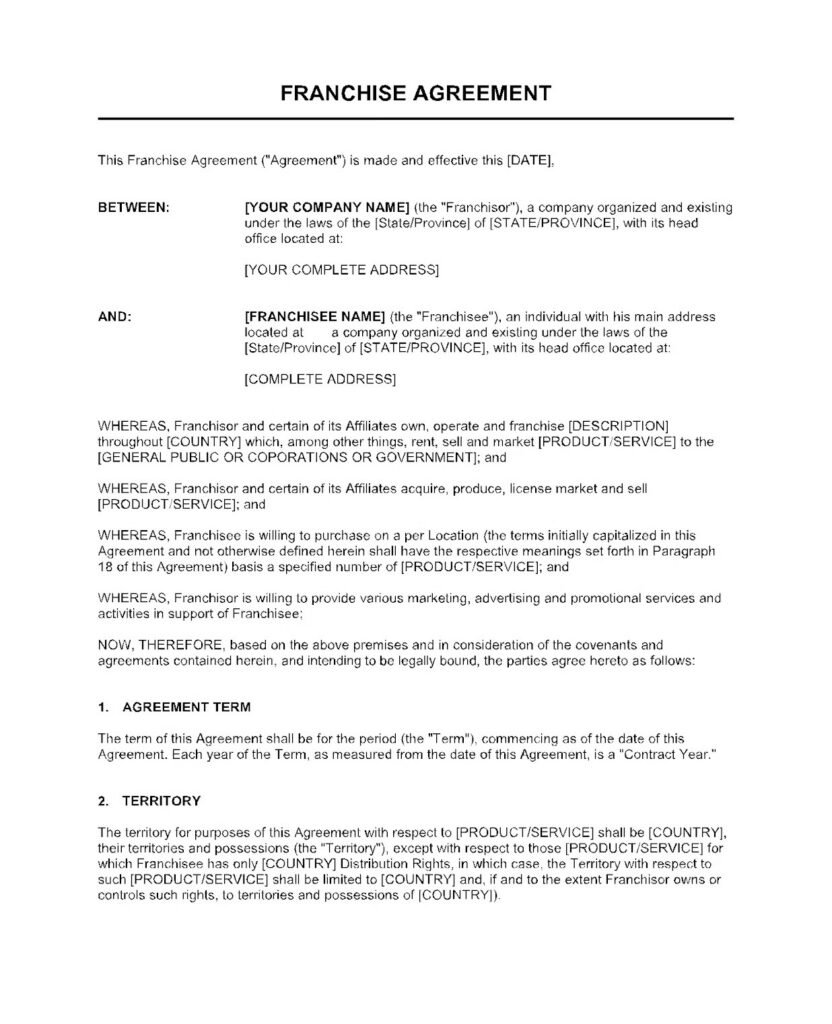
Format of a Franchise Agreement
A franchise agreement follows a structured legal format to ensure clarity and enforceability. While the specific layout may vary, it generally looks like this:
Key Things to Check Before Signing a Franchise Agreement
Before signing any franchise agreement draft or final document, a prospective franchisee must undertake thorough due diligence. Key things to check include:
- Disclosure Document (FDD): In many jurisdictions, franchisors are required to provide a Franchise Disclosure Document (FDD), which contains vital information about the franchisor, the franchise system, and the agreement itself. This is a critical document to review with a franchise agreement attorney.
- Financial Obligations: Fully understand all fees, royalties, advertising contributions, and other financial commitments.
- Term and Renewal: Be clear about the initial term of the franchise agreement and the conditions for renewal, including any renewal fees or updated terms.
- Territory: Understand whether your territory is exclusive or non-exclusive and the implications for competition.
- Support and Training: Assess the level of training and ongoing support provided by the franchisor.
- Operational Control: Understand the extent of the franchisor’s control over your daily operations.
- Termination Clauses: Be aware of the conditions under which the agreement can be terminated and the consequences.
- Dispute Resolution: Familiarize yourself with the process for resolving disputes.
- Franchisor’s Reputation: Research the franchisor’s track record and the satisfaction of their existing franchisees.
- Legal Review: Always have a franchise agreement attorney review the agreement. They can identify potential pitfalls and ensure your interests are protected. A franchise agreement checklist can be useful here.
Benefits of a Business Franchise Agreement
A well-structured franchise agreement offers numerous benefits for both parties:
1. For Franchisors:
- Controlled Expansion: Allows for rapid business expansion with less capital outlay.
- Brand Consistency: Ensures brand standards and operational consistency across all locations.
- Increased Market Share: Expands market presence and brand recognition.
- Reduced Risk: Shares operational risks with franchisees.
2. For Franchisees:
- Proven Business Model: Access to a successful and established business system.
- Brand Recognition: Benefits from an existing brand name and customer loyalty.
- Training and Support: Receives initial training and ongoing operational support.
- Marketing and Advertising: Access to established marketing strategies and materials.
- Reduced Business Risk: Lower risk compared to starting an independent business from scratch.