Benefits of Getting an FSSAI Central License
When you get an FSSAI Central License, you will have many benefits beyond just following rules:
- National Reach: It allows businesses to export/import food products across all Indian states and engage in international trade, to gain wider market access.
- Builds Customer and Partner Trust: When customers and partners see that you’re FSSAI-licensed, it shows them you care about quality and safety, and that builds lasting trust.
- Enhances Brand Credibility: A central license gives your brand a professional edge. It tells people that your food is safe, reliable, and worth their loyalty.
- Legal Compliance: It ensures your business operates within the legal framework of the Food Safety and Standards Act, 2006. This helps you avoid significant penalties, including fines and potential imprisonment, for non-compliance.
- More Business Opportunities: Many export deals and government contracts require a Central License; having one puts you ahead of the competition.
Eligibility Criteria for FSSAI Central License in India
Eligibility for an FSSAI Central License depends on your business’s operational scope, annual turnover, and specific activities.
Key criteria include:
- Annual Turnover: Businesses with an annual turnover of over Rs. 20 crore usually need a central license.
- Operational Scope: FBOs operating in more than one state need a central license for their main office.
- Import and Export: Any business importing or exporting food products must get a central FSSAI license for export or import.
- Large Food Manufacturers: If your business produces over 2 metric tonnes of food per day (excluding milk and meat), you need a Central License. This includes companies making packaged food, processed items, or ready-to-eat meals.
- Dairy Units: Businesses that handle more than 50,000 litres of milk per day or 2,500 metric tonnes of milk solids per year must apply for a Central License.
- Meat Processing Units: If your unit processes more than 500 kg of meat per day or 150 metric tonnes per year, this license is mandatory.
- 100% Export-Focused Businesses: Any food business that only exports food outside India must get a Central License, no matter how much it produces.
- Large Storage Facilities: Cold storage and other storage units with a capacity of over 50,000 Metric Tons.
- Central Government Agencies: All FBOs working under Central Government agencies or departments.
- Railway, Airport, Seaport Operations: Food businesses at airports, seaports, or railway stations.
- Wholesalers, Distributors, Retailers: Those operating in many states with an annual turnover above Rs. 20 crore.
- Meat Processing Units: If your unit processes more than 500 kg of meat per day or 150 metric tonnes per year, this license is mandatory.
- Transporters Handling Large Volumes: Businesses that use over 100 vehicles or transport more than 5,000 litres or kg of food per day need to register under the Central License category.
Documents Required to Secure FSSAI Central License
They depend on your business type (e.g., sole proprietorship, partnership, company). Here are the details:
Identity and Business Proof Documents
To apply for an FSSAI Central License, you need to submit:
- Identity and address proof of owners or authorized persons, such as Aadhaar, PAN, or Passport.
- Recent passport-sized photos of the applicant.
- Proof of business address, like a rent agreement, sale deed, or utility bills (no older than two months).
- A declaration form confirming that you follow FSSAI rules.
Business Registration Documents
The documents depend on your business type:
- For a sole proprietorship, a declaration on your letterhead.
- For partnership firms, a copy of the partnership deed.
- For companies, a Certificate of Incorporation, a Memorandum of Association (MoA), and Articles of Association (AoA).
- For co-operative societies, a resolution is passed by the managing committee.
Also needed:
- Board resolution or authorization letter stating who can sign the application.
- GST registration certificate, if applicable.
- Form IX for Nomination of the Person in Charge
- Import Export Code (IEC) is required if applicable.
Other Important Documents
You may also need to provide:
- A layout plan of your manufacturing or processing unit showing rooms and equipment.
- List of machinery and raw materials used.
- Water test report from a recognized lab, if water is used in food processing.
- Details of sources for milk or meat, if applicable.
- Pest control certificate and recall plan for high-risk food items.
- Proof of turnover (e.g., sales records or audit reports) may be requested by the authorities.
- No Objection Certificates (NOCs) from landlords or manufacturers, if needed.
How to Get an FSSAI Central License: Step-by-Step Process
The FSSAI central license procedure is mainly done online through the FoSCoS (Food Safety Compliance System) portal. This makes the application clear and efficient.
Here’s a step-by-step guide on how to apply for the FSSAI central license:
Step 1: Visit the FoSCoS Portal
Start by going to the official FoSCoS portal (foscos.fssai.gov.in). On the homepage, click “Apply for License/Registration” to begin your application.
Step 2: Select Your State and Business Type
These are the necessary steps eligible businesses need to complete:
- First, select your state from the dropdown menu.
- Next, choose “Central License” based on your business’s annual turnover and operational scope.
- Selecting “Central License” will take you directly to Form B, which is the specific application form for this license.
Step 3: Fill Form B Accurately
Fill out every section of Form B accurately to avoid delays. Make sure to include:
- Your complete business name and registered address.
- All necessary contact information, including email and phone numbers.
- Your specific food business type (e.g., a large dairy manufacturer or a food importer).
- A detailed list of all food categories your business handles.
- Your accurate annual turnover figures.
- The full details of the person authorized to apply.
- Include the name and qualifications of the technical expert.
- Specify the water source used for food processing.
- Indicate if any hazardous processes are involved.
Step 4: Upload Necessary Documents
- You must upload clear, scanned copies of all documents required for the FSSAI central license.
- Ensure each document is in the correct format (PDF, JPEG, or PNG).
- Check that file sizes are within the specified limits (usually 2-5 MB).
- Incorrect or unreadable documents can cause delays or lead to your application being rejected.
Step 5: Pay the Application Fee
After you have filled out Form B and uploaded all documents:
- Proceed to the payment page.
- Pay the FSSAI central license fees online (refer to the section below for fees information). You can use net banking, a credit card, or a debit card.
- The FSSAI central license cost depends on the validity period you choose, which can be from 1 to 5 years.
Step 6: Track Your Application Status
Once your payment is successful:
- You will receive a unique application reference number.
- Use this number to track your FSSAI central license registration status on the FoSCoS portal.
- FSSAI will review your application. They might contact you if they need more documents or clarification.
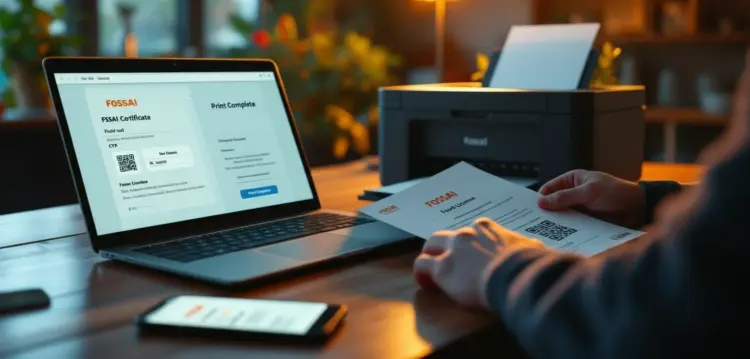
- Upon successful review and approval, you will receive your FSSAI Central License Certificate. You can then download this certificate.
This structured process helps ensure a smooth FSSAI central license online approval.
FSSAI Central License Fees
The FSSAI central license fees include government charges and, optionally, professional fees if you hire a consultant.
1. Government Fees for New FSSAI Central License
The government fee for an FSSAI Central License is set by the FSSAI. It varies by business type and chosen validity (1 to 5 years). The annual fee for most central license categories is Rs. 7,500.
- Manufacturer/Processor (large scale): Rs. 7,500 per year
- Importer/Exporter: Rs. 7,500 per year
- 100% Export Oriented Units: Rs. 7,500 per year
- Large Scale Food Service Providers (e.g., Central Government organizations): Rs. 7,500 per year
- Wholesalers, Retailers, Distributors operating in multiple states with turnover above Rs. 20 crore: Rs. 7,500 per year
Note: The total fee is the annual fee multiplied by the number of years you apply for (up to 5 years). For example, an FSSAI central license fee for 5 years for a manufacturer would be Rs. 7,500 * 5 = Rs. 37,500.
2. Professional Fees
This fee applies if you choose to utilize the services of a professional agency like RegisterKaro. While not set by the FSSAI, professional assistance can simplify the process and minimize the risk of rejection.
Timeline for Obtaining FSSAI Central License
The time it takes to get an FSSAI Central License can vary. Generally, after submitting a full and correct application with all documents and fees, the process may take:
- Initial Review: 7-15 days
- Inspection (if needed): 30-60 days (after initial review)
- License Issuance: Within 7-15 days of successful inspection/approval.
In total, expect the process to take 45 to 90 days. This assumes no major issues or requests for more information. Quick responses to FSSAI queries can speed things up.
Validity and Renewal of FSSAI Central License
An FSSAI Central License is valid for a period chosen by the FBO when applying. This period can be from 1 year to a maximum of 5 years.
FSSAI Central License Renewal Process
To keep operations legal, FBOs must start the FSSAI central license renewal process on time:
- Renewal Window: You can apply for renewal on the FoSCoS portal, usually 120 days before your license expires.
- Timely Application: It is vital to apply for renewal at least 30 days before the license expires.
- Late Fee: If you apply for renewal between 90 days and the expiry date, an extra fee of Rs. 100 per day will be added to the standard renewal fee.
- After Expiry: If a license expires, it becomes invalid. The FBO must then apply for a new license, restarting the entire application process, which may include new inspections and associated costs.
The documents for renewal are similar to a new application. You’ll also need existing license details and any updated business info.