Permissible in Islamic Law
The word Halal means “permissible” in Arabic. For food to be certified as Halal, it must be:
- Free from any forbidden (Haram) substances (e.g., alcohol, pork)
- Processed and prepared using clean and hygienic methods
- Obtained from animals that are slaughtered following Islamic religious guidelines
- Free from cross-contamination with non-Halal products
This certification helps Muslim consumers trust that the food or product aligns with their religious beliefs.
Benefits of Halal Certification in India
Halal certification is more than religious compliance. It acts as a quality assurance mark and helps businesses grow, especially in Muslim-majority markets. Key benefits include:
- Global Market Access: Many countries in the Middle East, Southeast Asia, and Europe require Halal certification for food and personal care imports.
- Consumer Trust: A Halal certification symbol builds confidence among Muslim buyers. It assures them that the product follows Islamic guidelines.
- Wider Customer Reach: Even non-Muslim consumers view Halal as clean, ethical, and safe, making it more appealing.
- Compliance Advantage: For exporters, Halal food certification is often required by trade laws. It helps avoid delays and rejection.
- Better Brand Image: It reflects ethical sourcing, clean practices, and respect for cultural values.
Applications of Halal Certification in India
Halal certification is not just for food products. Many industries in India are adopting it to meet global standards and consumer demand. Such as:
Food and Beverages
This is the most common area for Halal certification in India. It covers:
- Meat, poultry, and seafood
- Packaged foods and snacks
- Beverages, including juices and non-alcoholic drinks
- Food processing and catering services
Certified products carry the Halal certification symbol to assure Muslim consumers of their permissibility.
Consumer Products
Beyond food, many consumer goods require Halal compliance:
- Cosmetics and skincare products are free from prohibited substances
- Pharmaceuticals and health supplements
- Personal care items like soaps, deodorants, and toothpaste
- Packaging materials ensure no contamination with non-Halal items
These certifications help businesses tap into a growing market for ethical and religiously compliant products.
Financial Services
Halal certification also extends to Islamic finance, ensuring products and services comply with Shariah principles:
- Interest-free banking and financing
- Islamic insurance (Takaful)
- Investment products following ethical guidelines
This sector offers alternative financial services aligned with Muslim consumers’ beliefs.
Lifestyle and Travel
Halal certification influences lifestyle sectors, including:
- Halal-friendly hotels and resorts
- Travel agencies offering Halal-compliant tours and services
- Halal restaurants and catering services abroad
These services ensure that Muslim travelers have access to permissible food, prayer facilities, and cultural respect during their journeys.
Who Gives Halal Certification in India?
In India, Halal certification is issued by authorized Islamic organizations. Although no central law exists for Halal labeling in India, its certification is increasingly valued by producers and exporters.
These bodies inspect and audit the business operations to ensure they follow Halal standards. Here’s the list:
Jamiat Ulama-i-Hind Halal Trust
One of the oldest and most respected Islamic organizations, Jamiat Ulama-i-Hind Halal Trust, issues certification for food products, cosmetics, and pharmaceuticals. It has widespread recognition in India and abroad.
Halal India Pvt Ltd
Halal India Pvt Ltd offers certification services for manufacturers and exporters. It covers a range of industries, including food, personal care, and logistics, ensuring compliance with global Halal standards.
Halal Certification Services India (HCS)
HCS is known for its rigorous auditing process. It provides certification to food processing units, restaurants, and exporters, with a focus on international market acceptance.
Halal Council of India
The Halal Council of India works closely with both domestic and international Halal bodies. It offers certification for food, cosmetics, and other consumer products, helping businesses reach Muslim consumers worldwide.
Jamiat Ulama Maharashtra
Based in Maharashtra, this organization issues Halal certificates primarily for meat, poultry, and processed foods. It is well-recognized in Western India and plays a key role in local certification.
Indian Halal Development Council
The Indian Halal Development Council promotes Halal awareness and provides certification services across multiple sectors, including food, cosmetics, pharmaceuticals, and logistics. It focuses on enhancing export opportunities.
Note: India has no central law for Halal labeling, and certifiers vary in acceptance; some have faced disputes and legal action, including allegations of misuse by the UP government.
QCI i-CAS Halal Scheme for Exports
The QCI i-CAS (Quality Council of India – India Conformity Assessment Scheme) Halal Scheme is a government-backed certification program designed to support Indian exporters targeting Muslim-majority countries.
QCI i-CAS was established under DGFT Notification No. 03/2023. It applies to meat and meat product exporters and will be mandatory from October 16, 2024. The scheme covers shipments to Bahrain, Bangladesh, Indonesia, Iran, Iraq, Jordan, Kuwait, Malaysia, Oman, Philippines, Qatar, Saudi Arabia, Singapore, Turkey, and the UAE.
Key features of the QCI i-CAS Halal Scheme include:
- Compliance with global Halal standards, ensuring acceptance in the Middle East, Southeast Asia, and other Islamic markets
- Strict audit and inspection processes to verify Halal practices in manufacturing and handling
- Issuance of a trusted Halal certification symbol recognized by importing countries
- Support for businesses in meeting export regulations and enhancing market access
Exporters looking to boost their presence in international Halal markets should consider obtaining certification under this scheme for credibility and smoother trade.
Essential Prerequisites for Halal Compliance
To obtain Halal certification in India, businesses must meet several important requirements that ensure compliance with Islamic law:
- Ingredient Verification: All ingredients must be free from Haram substances like pork, alcohol, and non-Halal animal derivatives.
- Proper Slaughtering: Animals must be slaughtered following Islamic rites, ensuring humane treatment and proper drainage of blood.
- Clean and Hygienic Facilities: Manufacturing, storage, and transportation must prevent contamination with non-Halal items.
- Separate Equipment: Use dedicated machinery and utensils or ensure thorough cleaning to avoid cross-contamination.
- Documentation and Traceability: Maintain detailed records of sourcing, production processes, and supply chains for audit purposes.
- Employee Training: Staff must be trained on Halal standards and handling procedures to maintain compliance.
Meeting these prerequisites is crucial before applying for Halal certification and audit processes. Proper compliance ensures certification approval and builds consumer trust.
Documents Required for Halal Certification in India
You need to submit specific documents to complete your application successfully:
- Completed the application form for your certification type
- Business registration documents (GST registration, Company Registration/LLP registration)
- FSSAI Registration certificate or license
- Complete list of ingredients with sources
- Process flow charts for manufacturing/preparation
- Facility layout plans showing production areas
- Product labels and packaging samples
- Supplier certificates for all ingredients
- Quality management system documentation
- Staff training records on halal procedures
Additional Requirements by Business Type
- Restaurants: Menu items and recipe details
- Manufacturers: Equipment cleaning procedures
- Slaughterhouses: Animal welfare and handling protocols
- Exporters: Target country-specific documentation
How to Obtain Halal Certification in India?
Getting Halal certification in India requires a structured process to ensure compliance with Islamic guidelines. Below is a step-by-step overview of how businesses can get certified.
Step 1: Initial Inquiry and Application Submission
- The first step is to contact a recognized Halal certification body (such as Jamiat Ulama-i-Hind Halal Trust or Halal India Pvt Ltd.).
- Submit an initial inquiry to understand requirements and process details.
- Then, fill out and submit the official application form with basic company and product information.
Step 2: Fee Payment and Service Agreement
Once the application is accepted, pay the required Halal certification fees. Sign a service agreement outlining the terms, scope of certification, and responsibilities of both parties.
Step 3: Document Submission and Review
Next, you will need to submit detailed documentation, such as:
- Ingredient lists and sources
- Manufacturing and processing flowcharts
- Supplier certifications
- Storage and handling procedures
The agency reviews these documents carefully to ensure all ingredients and processes comply with Halal requirements.
Step 4: Audit Process
A physical audit is conducted at your premises. Inspectors verify:
- Proper slaughtering methods (if applicable)
- Cleanliness and hygiene standards
- Equipment and utensils to prevent cross-contamination with Haram substances
- Storage and transport practices
Step 5: Evaluation and Corrective Actions
After the audit, the certifying body evaluates the findings. If there are any deviations or non-compliances, you will receive a report detailing required corrective actions. You must complete these within a set timeline and submit evidence for re-evaluation.
Step 6: Certification Decision and Issuance
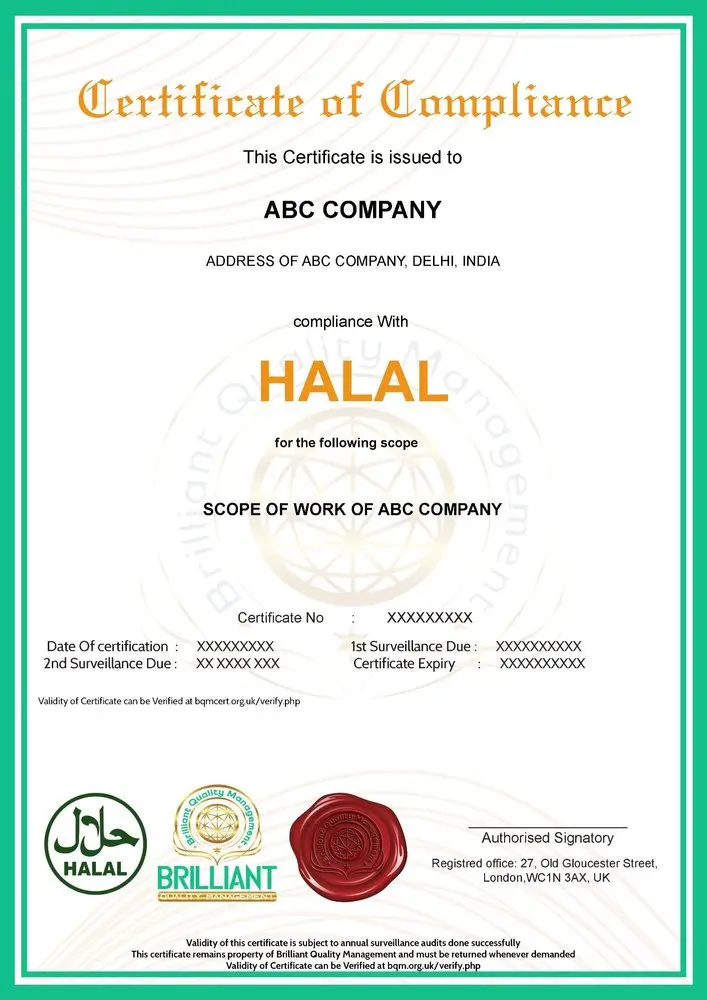
Once all criteria are met, the certification body issues the official Halal certificate, which is usually valid for 1 year. Along with the Halal certificate, you also receive the right to:
- Use the Halal certification symbol on your product labels
- Display the symbol on packaging materials (e.g., boxes, wrappers, bottles)
- Add the symbol to your marketing materials (e.g., brochures, websites, menus)
Build trust with Muslim consumers by showing verified Halal compliance and enhance export acceptance in Muslim-majority countries.