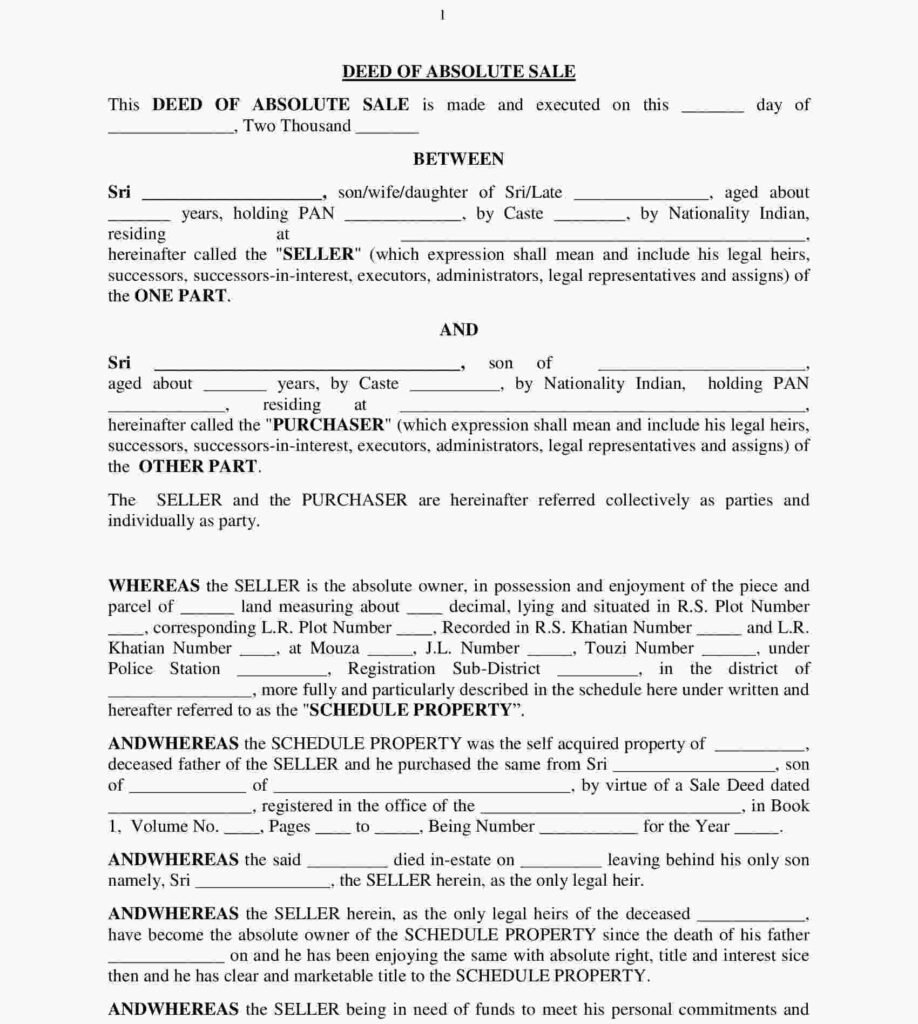
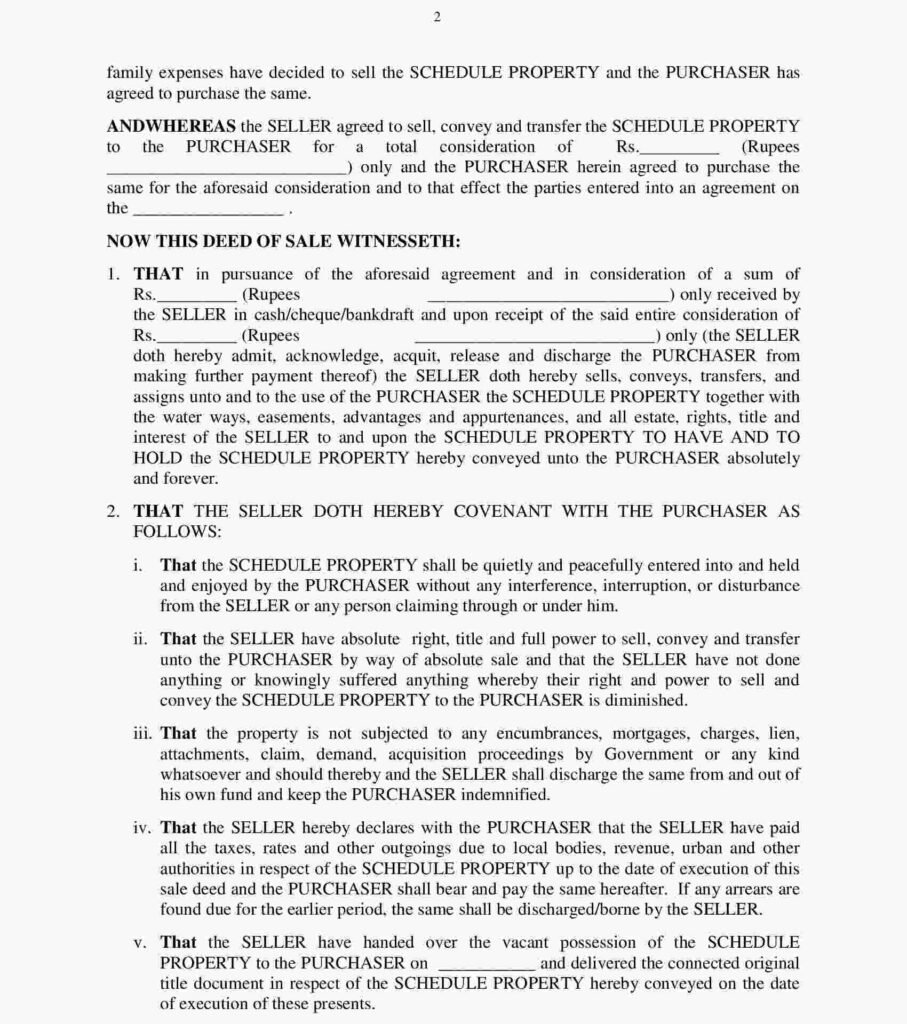
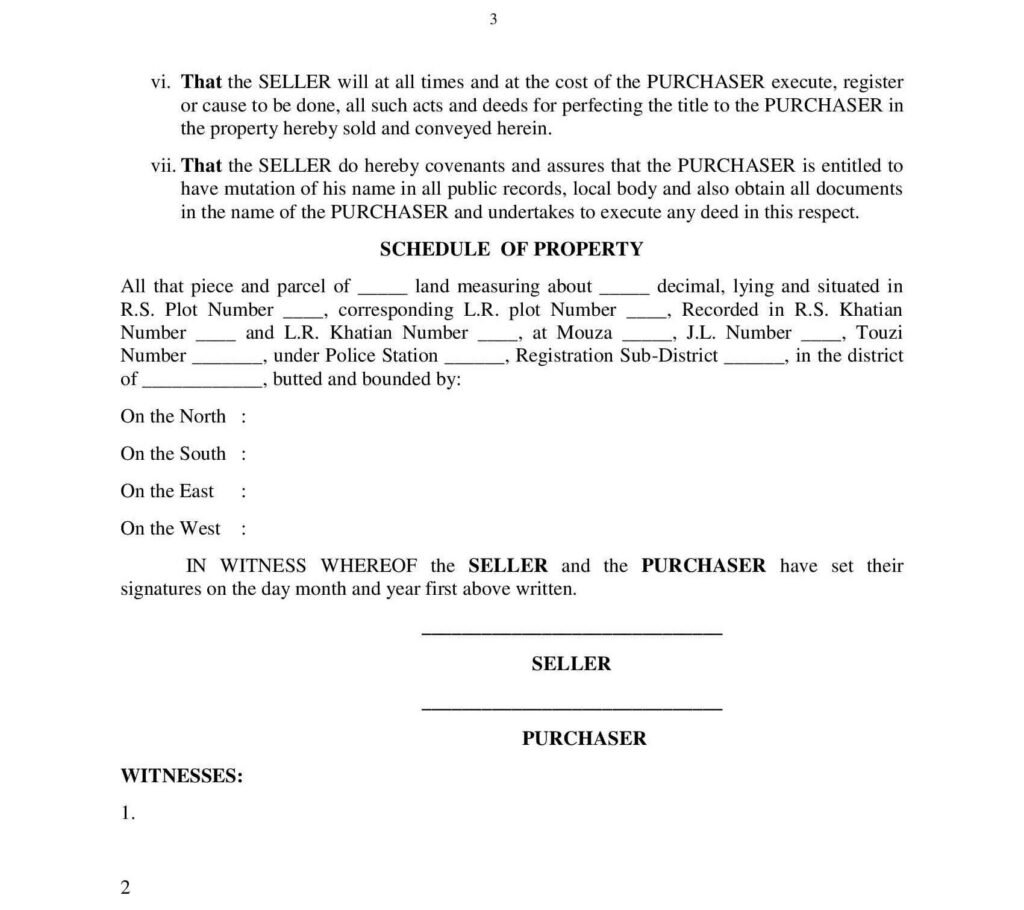
What is a Sale Deed Registration?
Sale deed registration is a crucial legal process that finalises the transfer of property ownership from the seller to the buyer. It involves documenting the transaction with the local sub-registrar office, ensuring that the buyer’s rights are officially recorded and recognised under the law.
This process offers legal protection by serving as conclusive proof of ownership and preventing future disputes or claims over the property. Once registered, the sale deed becomes a legally binding document, making it essential for any real estate transaction in India.
Why is a Sale Deed Important: Benefits
- Legal Transfer of Ownership: A registered sale deed officially transfers the title of the property to the buyer.
- Mandatory for Legal Recognition: Without registration, the buyer’s ownership is not recognized by legal authorities like the Sub-Registrar, courts, or municipal bodies.
- Essential for Future Transactions: Only a registered owner can sell, lease, or mortgage the property legally.
- Protects Both Parties: The deed outlines the terms, conditions, and responsibilities of both buyer and seller.
- Acts as Legal Proof: It serves as vital evidence in case of disputes related to the property.
- Not Just a Formality: Sale deed registration is a legal requirement, not an optional step.
- A registered sale deed is also necessary to update the property records (mutation) in the buyer’s name with the local revenue authorities. Without it, the buyer won’t be officially recorded as the new owner. It’s also a key document required by banks and financial institutions when applying for a home loan.
Sale Deed vs. Sale Agreement
It’s common to confuse a Sale Deed with a Sale Agreement, but they serve distinct purposes in a property transaction.
Sale Deed vs. Conveyance Deed
Often, the terms “Sale Deed” and “Conveyance Deed” are used interchangeably, and for most practical purposes, they refer to the same document in the context of a property sale.
Eligibility for Sale Deed Registration
Here’s a concise breakdown of the eligibility for Sale Deed Registration:
- Legal Competence: Both the buyer and the seller must be legally competent to enter into a contract. This means they must:
- Be of legal age (18 years or older).
- Be of sound mind.
- Not be disqualified by any law from contracting (e.g., undischarged insolvents, or those specifically prohibited by court order).
- Voluntary Consent: The consent of both the buyer and the seller must be free and voluntary, without any coercion, undue influence, fraud, or misrepresentation.
- Authority to Transfer: The seller must have the legal right and authority to transfer the property. This implies they must be the rightful owner of the property and have a clear, marketable title.
- Valid Consideration: There must be a lawful monetary consideration (the sale price) involved in the transaction. This consideration must be agreed upon by both parties.
- Legal Object: The object of the sale (the property) must be legal and not prohibited by any law.
- Representation (if applicable): If either party is acting through a representative (e.g., a Power of Attorney holder), that representative must have a valid and properly registered Power of Attorney granting them the authority to execute the Sale Deed. In the case of companies, trusts, or other legal entities, the authorized signatory must have the necessary board resolutions or trust deeds to support their authority.
- Witness Requirements: The witnesses to the Sale Deed should also be of sound mind and legal age, as they attest to the signatures of the buyer and seller.
Elements of a Sale Deed
A comprehensive Sale Deed typically includes:
- Parties Involved: Names, addresses, and details of both the buyer and the seller.
- Property Details: A detailed description of the property, including its location, area, boundaries, and survey numbers.
- Consideration (Sale Price): The agreed-upon amount for which the property is being sold.
- Payment Details: How and when the payment was made.
- Encumbrance Clause: A declaration by the seller that the property is free from any encumbrances like mortgages, liens, or legal disputes.
- Possession Clause: Specifies when the physical possession of the property will be handed over to the buyer.
- Indemnity Clause: The seller’s assurance to compensate the buyer for any loss arising from title defects.
- Witnesses: Signatures and details of at least two witnesses.
- Signatures: Signatures of both the buyer and the seller.
- Stamp Duty and Registration Fees: Details of the duties and fees paid.
- Dispute Resolution Clause: Specifies the method and forum for resolving any disputes, such as arbitration, mediation, or court jurisdiction.
- Legal Heirs Clause: States that the rights and obligations under the sale deed will transfer to the legal heirs of both parties in case of death.
Roles and Responsibilities of Buyer and Seller in the Sale Deed
Both parties have crucial roles to play to ensure a smooth sale deed registration.
Seller's Responsibilities
- Provide a clear and marketable title to the property.
- Hand over physical possession of the property.
- Pay all outstanding property taxes and utility bills until the date of sale.
- Disclose any defects or encumbrances on the property.
- Provide all necessary documents for the sale deed preparation.
- Cooperate in the registration process.
Buyer's Responsibilities
- Conduct due diligence on the property and the seller’s title.
- Arrange for the agreed-upon sale consideration.
- Pay the applicable stamp duty and registration fees.
- Ensure all necessary documents are in order.
- Cooperate in the registration process.
Documents Required for Sale Deed Registration
While specific requirements might vary slightly by state, generally, you will need:
Process of Drafting a Sale Deed in India
Drafting a Sale Deed requires precision and legal expertise. Here’s a general outline:
Step 1: Gather Comprehensive Information
Before drafting, collect all necessary details from both the buyer and seller, and about the property. This includes:
- Parties’ Details: Full names, addresses, father’s/husband’s names, PAN numbers, and Aadhaar numbers (or other valid IDs) for both buyer(s) and seller(s).
- Property Details: Complete address, exact area (e.g., in sq. ft. or sq. meters), plot number, survey number/khasra number, municipal number, village/colony name, district, and any specific landmarks. Also, collect details of the property’s boundaries (north, south, east, west).
- Consideration: The final agreed-upon sale price in both figures and words.
- Payment Details: How the payment was made (e.g., cheque number, bank transfer details, date of payment, amount paid as advance/earnest money, balance amount).
- Title Documents: Obtain copies of previous Sale Deeds, mutation records, property tax receipts, Encumbrance Certificate, and any other relevant title documents to verify the seller’s clear ownership.
- Existing Encumbrances: Details of any existing loans, mortgages, or legal charges on the property that need to be cleared before sale.
- Possession Date: The agreed date on which the physical possession of the property will be handed over to the buyer.
- Witness Details: Names, addresses, and ID proofs of at least two witnesses.
Step 2: Appoint a Legal Professional
It is highly recommended to engage an experienced legal professional (advocate or deed writer) to draft the Sale Deed.
Their expertise ensures the document is legally sound, covers all necessary clauses, and complies with relevant laws like the Transfer of Property Act, 1882, and the Indian Stamp Act, 1899. In certain states, if you’re not hiring a private lawyer, licensed government-approved deed writers are also permitted to draft the document.
Step 3: Initial Draft Preparation
The legal professional will prepare the first draft of the Sale Deed based on the information gathered in Step 1. This draft will typically include:
- Preamble: Stating the date and place of execution, and identification of parties.
- Recitals: Background information about the property, how the seller acquired it (derivation of title), and the Sale Agreement (if any) executed before.
- Operative Clause: The core clause stating that the seller is transferring ownership to the buyer for the agreed consideration.
- Property Description: Detailed schedule of the property being sold.
- Covenants by Seller: Clauses where the seller assures good title, freedom from encumbrances, and agrees to indemnify the buyer against future claims.
- Possession Clause: Details about physical handover.
- Consideration Clause: Acknowledgment of receipt of the sale price.
- Witness Clause: Space for witness details and signatures.
- Stamp Duty and Registration Details: Information about who bears these costs.
Step 4: Review and Verification
Both the buyer and the seller, along with their respective legal advisors, must meticulously review the initial draft.
- Verify Accuracy: Check all names, addresses, property details, and the sale consideration for accuracy.
- Clause Understanding: Ensure all clauses are clearly understood and accurately reflect the terms agreed upon.
- Corrections/Amendments: Propose any necessary corrections, additions, or deletions. This iterative process continues until both parties are fully satisfied with the content.
Step 5: Finalization and Printing on Stamp Paper
Once all parties approve the draft, the Sale Deed is finalized.
- Stamp Duty Calculation: The stamp duty for the sale deed is calculated based on either the property’s market value or the sale price, whichever is higher, using the prevailing stamp duty rates in the respective state.
In several states like Delhi, Rajasthan, and Maharashtra, women enjoy reduced stamp duty rates compared to men, making it more cost-effective to register the property in a woman’s name. This is to prevent undervaluation of property to evade stamp duty.
- Procurement of Stamp Paper: The Sale Deed is then printed on non-judicial stamp paper of the calculated value. In many states, this is done through e-stamping, where the duty is paid online, and a certificate is generated, which is then affixed to the printed document. Alternatively, physical stamp papers are purchased from authorized vendors.
Step 6: Signing and Witnessing
- The final Sale Deed is signed by the seller(s) and buyer(s) on all pages.
- At least two witnesses must be present during the signing. They also sign the Sale Deed, attesting to the signatures of the buyer and seller. Ensure the witnesses also provide their full names and addresses.
How to Register a Sale Deed?
Registering your sale deed is a mandatory final step. Here is the process to follow:
- Pay Stamp Duty & Registration Fees: Calculate and pay the required sale deed stamp duty and registration fees to the government, usually online or through authorized banks.
- Visit Sub-Registrar Office: The buyer, seller, and witnesses must visit the Sub-Registrar’s Office (SRO) in whose jurisdiction the property is located.
- Presentation of Sale Deed: Submit the original Sale Deed along with all supporting documents.
- Verification: The Sub-Registrar verifies the identities of the parties and witnesses.
- Biometrics/Photographs: Thumb impressions and photographs of all parties are taken.
- Signing of Register: The parties and witnesses sign the SRO’s register.
- Endorsement: The Sub-Registrar endorses the Sale Deed, officially registering it.
- Collection: After a few days, you can collect the registered sale deed from the SRO.
Contact a professional and get help getting your sale deed registered.